
Leon Weber · 11 September 2026
How Niche Webmasters Are Leveraging Regional Forum Archives for Sustainable Referral Traffic
Regional forum archives have become a steady resource for niche webmasters seeking consistent referral traffic that does not rely on constant content churn or paid campaigns. These archives contain threads from local discussion boards that date back years or decades and often cover topics such as regional hobbies, product troubleshooting, and community events. Webmasters locate these dormant posts, preserve the original links, and integrate relevant excerpts or summaries into their own sites to capture visitors who continue to follow those older conversations.
Data from digital engagement reports shows that many regional forums maintain active user bases even when new posts slow down, because search engines still index the older material. Observers note that webmasters who monitor these archives can identify evergreen queries that keep driving clicks long after the original discussion ended. This approach works particularly well in smaller language communities or geographic areas where mainstream platforms receive less attention.
Identifying Valuable Archives Across Regions
Webmasters begin by cataloging forums that operate in specific languages or focus on particular territories. They scan domains tied to countries in Europe, Asia-Pacific, and the Americas, then check for sections that have not received new activity since the mid-2010s. Tools that crawl public archives allow them to export thread titles, usernames, and timestamps without violating site rules. Researchers at institutions such as the Oxford Internet Institute have documented how these older datasets retain search visibility when they address practical local concerns.
Once an archive is selected, the next step involves mapping teh most referenced topics to existing site content. A webmaster might notice repeated questions about vintage car parts in a Scandinavian forum from 2008, then create a detailed guide that links back to the original thread. The referral occurs when forum users or search visitors follow that preserved link and land on the new resource.
Methods for Extracting and Repurposing Threads
Successful practitioners combine manual review with automated scripts that flag threads containing external links or high comment counts. They extract context such as product names, regional regulations, or service comparisons, then rewrite the material into updated formats that include current data. This process keeps the referral source intact while adding fresh value that encourages additional shares. In September 2026, several regional archives in Australia and Canada reported renewed interest in threads about energy-efficient home upgrades, prompting webmasters to refresh related pages with new statistics from government energy agencies.
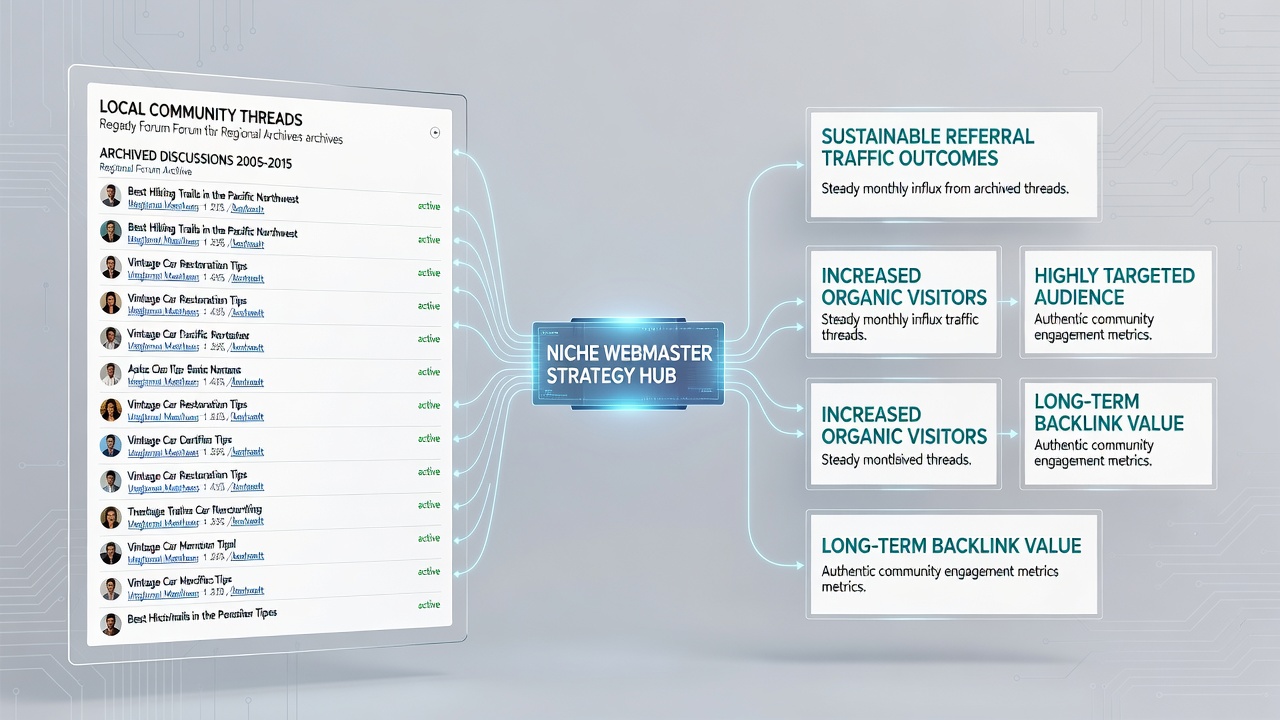
Traffic logs reveal that visitors arriving from these archives spend longer on pages that directly address the original concern rather than offering generic overviews. Webmasters therefore prioritize accuracy when citing old posts and often include the archive date to maintain transparency. This practice builds trust with readers who recognize the source material.
Measuring Referral Traffic and Longevity
Analytics platforms indicate that referral traffic from forum archives tends to arrive steadily rather than in spikes, which helps site owners plan server resources and advertising budgets. One study of European discussion boards found that threads older than ten years still accounted for measurable inbound clicks when the topics involved local regulations or product compatibility. Webmasters track these patterns through custom UTM parameters that distinguish archive referrals from other sources, allowing them to calculate return on the time spent curating each archive.
Because forum domains frequently maintain high domain authority within their niches, a single preserved link can generate ongoing visits without additional promotion. Those who manage multiple regional archives report that combining sources from different continents creates a diversified traffic portfolio less vulnerable to changes in any single search algorithm.
Challenges and Technical Considerations
Webmasters must navigate robots.txt restrictions and terms of service that limit scraping. Many choose to link directly to archived pages rather than reproduce full content, which reduces legal exposure while still delivering value. They also monitor archive availability, because some regional forums occasionally purge older material or migrate to new platforms. Regular checks ensure that referral links remain functional and continue to pass authority.
Another consideration involves language accuracy. When translating or summarizing threads from non-English archives, webmasters consult native speakers to preserve original meaning. This step prevents mismatches that could send visitors to irrelevant pages and reduce future referrals.
Conclusion
Regional forum archives provide niche webmasters with a durable source of referral traffic grounded in longstanding community discussions. By systematically identifying, preserving, and contextualizing older threads, site owners capture visitors who continue to search for the same localized information years later. The approach requires consistent monitoring and careful integration with existing content, yet it delivers measurable results that complement other acquisition channels. As more archives reach their second or third decade online, the practice is expected to expand across additional languages and territories.